

To be carried out with service providers.
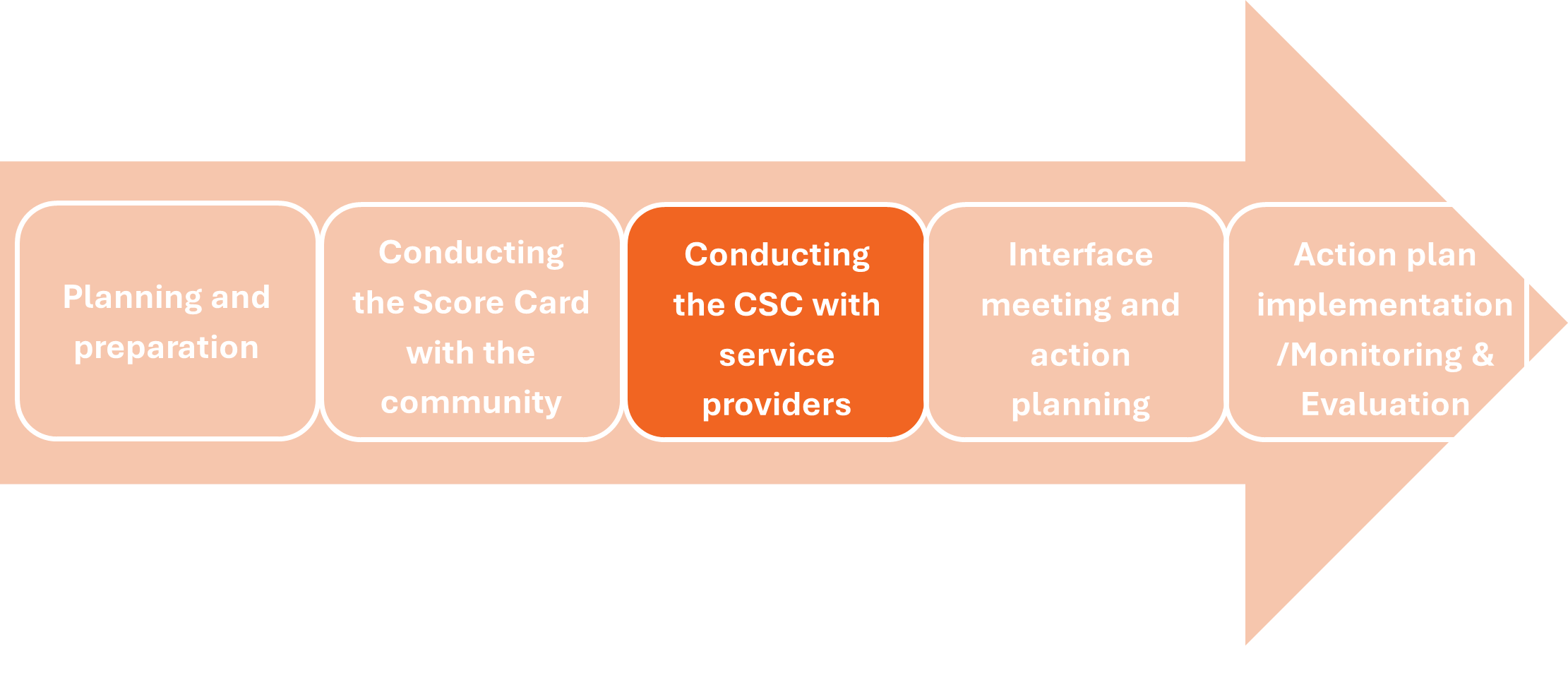
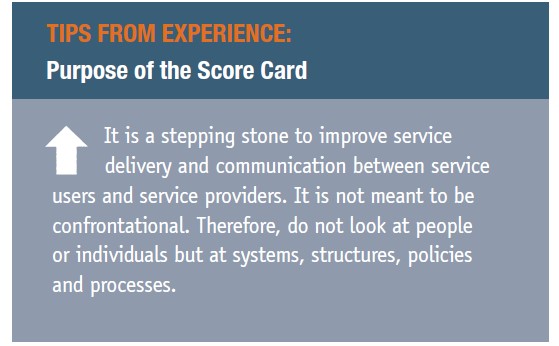
NOTE: A service provider Score Card can be conducted after the community Score Card has been completed or it can be conducted concurrently. The process for the providers is essentially the same as that for the users. The pace, however, for generating issues of concern and indicators with service providers is often much quicker because of the literacy levels of service providers. The indicators generated by the providers are usually similar to those of the community because the service providers often identify the same issues but from a different angle. One common difference is that the providers may have one or two additional indicators not mentioned by the community. The pace is also quicker because it is usually not necessary to consolidate scores since the service provider generally come from only one group (i.e., one institution). However, it is important to clearly explain to the service providers that the Score Card process is not to point fingers at individuals but to improve service delivery problems. This requires a shift or change in attitude of the staff to be open minded and critical thinkers while taking part in the scoring process.
Step 1: Organise the service provider Score Card
1.1 Choose a facilitator who is most suited to lead the Scoring exercise. This should be someone who is trusted by other staff and is sufficiently mature to lead. Use participatory facilitation methods with the service providers as with the community.
1.2 Agree on a date and venue for the exercise; try to meet somewhere the staff will not be disturbed to attend to other issues or problems.
1.3 Explain the benefits and purpose of the Score Card to all staff to make sure everyone understands and does not feel threatened.
1.4 If the community Score Card process has already been conducted, let the facilitators explain to the rest of their colleagues what was done, how and why.
Step 2: Generate issues
1.1 Explain to the group that they will start their session by sharing some general issues about certain aspects of their programme or service. For instance, they will respond to such questions as:
• What are the types of services we offer?
• How do we offer them?
• What are the main challenges?
• What is the role of the community in service delivery, and do they take part? Why?
• What can be done to improve the situation?
Issues raised could be positive or negative. Remind yourselves as service providers about the possible issues you thought might be good to review or discuss when you originally planned the Score Card process.
1.2 Note all the issues generated by the group on flipchart paper, BUT only when they have been agreed upon. For the problems or challenges listed, ask for suggestions to improve them and for the strong points, discuss how to maintain them. Note all the discussions.
Step 3: Develop indicators
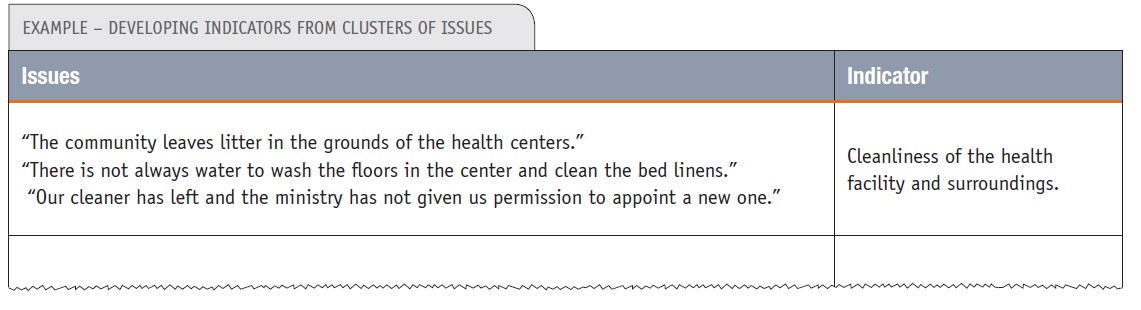
After the general issues have been generated, identify the major issues and from those, develop indicators and list the issues related to each indicator under it. Similar issues might generate related indicators which can be clustered under one “theme”; e.g. indicators concerning management of the services, delivery of the service, staff attitudes toward clients, availability of equipment to deliver the service, etc.
Step 4: Create the service provider Score Card
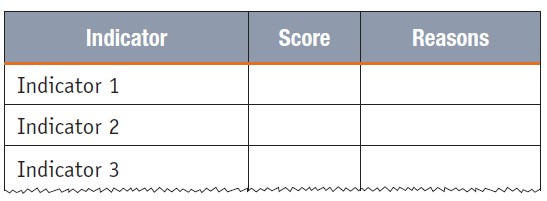
3.1 After the indicators have been developed (by facilitators at the office), the service provider group will now have to score each indicator. Explain the different scoring methods and agree on a method (preferably use a method similar to that used in the community).
3.2 Starting with the first indicator, ask the service provider group to give it a score using the identified technique. Make sure the group has agreed on the score before writing it on the matrix. Check that each score includes the views of the quieter staff members in the group. Include reasons for the scores.
3.3 Repeat the process for the other indicators on the scoring matrix.